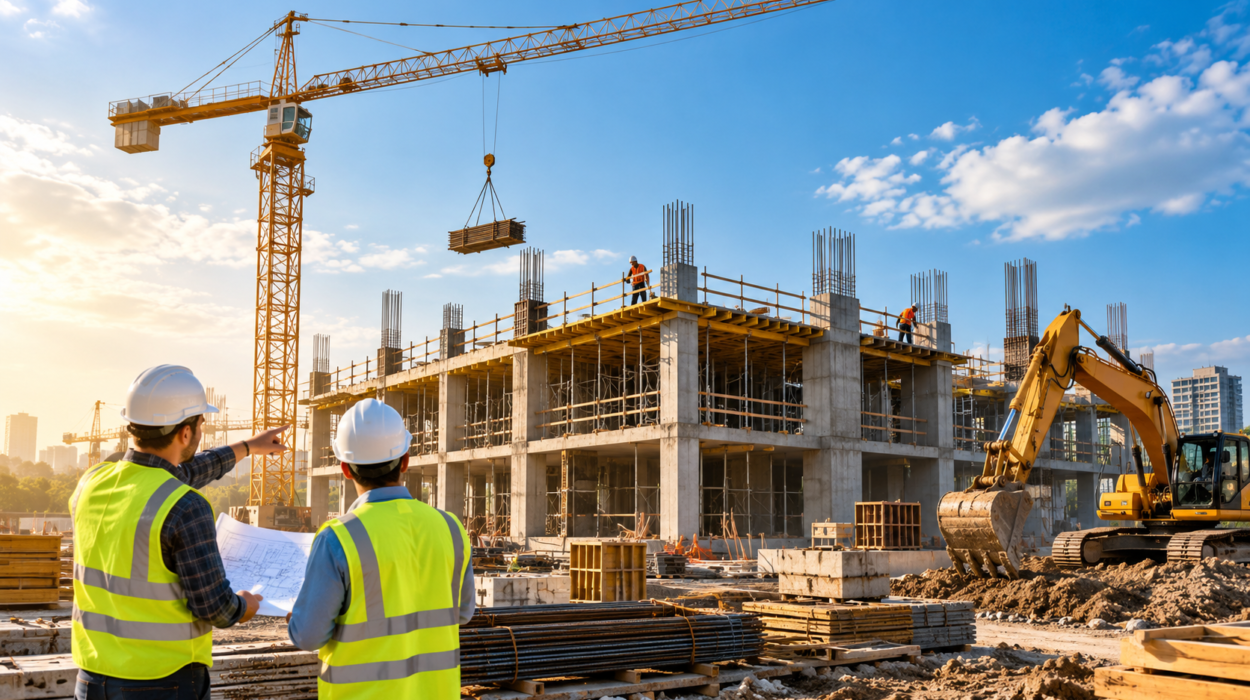
Getting your construction company noticed can be challenging, especially when competing against established contractors with larger marketing budgets. While advertising and word-of-mouth recommendations can help attract customers, digital public relations offers another way to build awareness and strengthen your reputation.
Digital PR involves gaining exposure through online publications, industry websites, news outlets, and other relevant platforms.
For construction companies, this might mean getting featured in a regional newspaper, contributing expert commentary to an industry publication, or sharing an interesting story about a recently completed development.
Unlike traditional advertising, digital PR often focuses on earning attention through newsworthy information and valuable expertise.
When approached effectively, it can help your company reach potential customers, develop professional relationships, and become more recognisable within the construction industry.
Here’s how to use digital PR to increase your construction company’s visibility.
What Is Digital PR for Construction Companies?
Digital PR is the process of building a company’s reputation and online visibility through media coverage, professional relationships, and useful content.
It shares similarities with traditional public relations but places greater emphasis on digital platforms.
For example, a construction company might announce the completion of a major commercial development.
A regional business publication could cover the story and mention the contractor responsible for the project.
Alternatively, an industry website might publish an interview with one of your project managers about innovative building methods.
These opportunities introduce your company to audiences beyond your existing customers.
Digital PR can also generate website visits, professional enquiries, and valuable industry connections.
The goal is to give people genuine reasons to talk about your business.
Why Digital PR Matters in the Construction Industry
Construction projects often involve significant financial commitments.
Customers want to work with companies they consider reliable, experienced, and professional.
Media coverage can help establish credibility by showing that your business is active within the industry.
For example, a contractor featured in a respected construction publication may appear more established to potential commercial clients.
Local news coverage can also introduce your company to homeowners and property developers in your service area.
Digital PR provides opportunities to demonstrate expertise rather than relying entirely on promotional claims.
However, publicity alone doesn’t guarantee new business.
The strongest results usually come when media coverage supports an already professional website, positive reputation, and reliable customer experience.
Identify What Makes Your Construction Company Newsworthy
One of the biggest challenges in digital PR is finding stories that publications want to cover.
Simply announcing that your company offers construction services is unlikely to attract much interest.
Journalists and editors generally look for information that matters to their readers.
Fortunately, construction companies often have access to interesting stories.
These might include:
- Completion of significant local developments.
- Restoration of historic buildings.
- Innovative construction techniques.
- Sustainable building initiatives.
- Community improvement projects.
- Major commercial refurbishments.
- Industry awards and achievements.
- Unusual engineering challenges.
Think about what makes a particular project different.
A routine residential renovation may not interest a national publication, but a remarkable transformation could appeal to a local newspaper or property magazine.
Focus on the story rather than the opportunity to advertise your company.
Build Relationships With Construction Industry Publications
Specialist construction publications can provide access to highly relevant audiences.
Their readers may include contractors, architects, engineers, developers, suppliers, and other industry professionals.
Start by identifying publications that cover your services.
For example, a company specialising in commercial construction might approach websites discussing property development and building projects.
Read several articles before making contact.
Pay attention to the subjects covered and the types of contributions accepted.
Some publications feature expert interviews, while others publish project case studies or industry commentary.
When contacting an editor, suggest a specific topic that would interest their readers.
Avoid sending generic messages asking for publicity.
A well-researched proposal demonstrates professionalism and makes collaboration more appealing.
Share Stories About Completed Construction Projects
Completed projects can provide excellent material for digital PR campaigns.
However, not every project needs a press release.
Look for developments with a distinctive feature or wider relevance.
For example, a commercial refurbishment that transforms a disused building into a community facility may interest local media.
A complex restoration project could appeal to architecture and heritage publications.
When preparing your story, explain the project’s purpose, challenges, and outcome.
Include accurate details about the work completed.
Photographs can make the story more appealing, particularly when they show a significant transformation.
Always obtain appropriate permission before sharing customer information or commercially sensitive project details.
A compelling project story can generate attention while demonstrating your company’s capabilities.
Use Local News Websites to Build Regional Awareness
Local media can be particularly valuable for construction companies operating within specific geographical areas.
Regional newspapers and business websites regularly cover developments affecting their communities.
These might include new housing projects, commercial developments, public facilities, and restoration work.
If your company contributes to an interesting local project, consider contacting relevant journalists.
Explain why the development matters to local residents or businesses.
For example, a project creating additional community space may be more newsworthy than a routine announcement about your company’s services.
Provide clear facts, photographs, and contact information.
Local coverage can introduce your business to people who may not otherwise discover it.
It may also help establish your company as an active participant in the regional construction industry.
Offer Expert Commentary on Industry Developments
Construction professionals often possess knowledge that journalists and readers find useful.
Your company may have experience with changing material costs, sustainable construction, building regulations, or project management challenges.
Consider offering expert commentary when relevant topics appear in the news.
For example, a journalist writing about home renovation trends might appreciate insights from an experienced residential contractor.
A commercial property publication could seek commentary about the challenges of refurbishing older office buildings.
Keep your contributions factual and accessible.
Avoid making unsupported predictions or presenting personal opinions as established industry facts.
Providing useful commentary can help journalists recognise your company as a potential source for future articles.
Create Original Research That Publications Can Reference
Original research can give journalists a reason to mention your construction company.
You don’t necessarily need an enormous research budget.
Useful information may already exist within your business, provided it can be shared legally and responsibly.
For example, you could analyse anonymised information about common renovation enquiries or project planning challenges.
You might also conduct a customer survey exploring what homeowners consider most important when choosing a contractor.
Present the findings clearly.
Explain how the information was collected, how many people participated, and any important limitations.
Avoid presenting small or unrepresentative samples as definitive evidence of nationwide trends.
Credible research can support articles, industry discussions, and professional presentations.
Publish Construction Industry Insights on Your Website
Your own website can support digital PR by providing journalists with useful information.
Consider creating a section featuring industry insights, project announcements, and expert commentary.
For example, you might publish an article explaining the challenges of renovating older commercial buildings.
Another article could explore practical considerations when using sustainable construction materials.
These resources give journalists background information about your expertise.
They also provide suitable pages to reference when discussing related topics.
Keep articles accurate and regularly review information that may change.
A website containing genuinely useful resources is more likely to support productive media relationships than one featuring only promotional statements.
Use Project Photography to Attract Attention
Construction is a highly visual industry.
Strong photographs can make your stories more interesting to journalists and online publications.
Consider documenting important projects throughout their development.
Capture images showing the original site, major construction stages, and completed work.
Before-and-after comparisons can be particularly effective.
For example, photographs showing the restoration of a neglected building may communicate the project’s impact immediately.
Use clear, high-resolution images where possible.
Provide captions explaining what each photograph shows.
Make sure you have permission to distribute the images and that they don’t reveal confidential information.
Professional photography isn’t essential for every story, but image quality can influence how easily publications use your material.
Collaborate With Architects and Industry Partners
Construction projects frequently involve several specialist organisations.
Architects, engineers, suppliers, and developers may all contribute to the same development.
Joint publicity can help everyone involved reach additional audiences.
For example, your construction company could collaborate with an architectural practice to publish a case study about a completed project.
A building materials manufacturer might also want to showcase how its products were used.
Coordinate your communications so that information remains accurate and consistent.
Agree on which photographs, project details, and company names can be published.
Collaborative stories can provide a more complete explanation of the project.
They may also strengthen relationships that lead to future business opportunities.
Participate in Community Construction Projects
Community involvement can create meaningful publicity opportunities.
Construction companies often have skills and resources that can benefit local organisations.
For example, your team might help renovate a community centre or contribute expertise to a local improvement project.
Such activities may interest regional publications.
However, community participation should provide genuine value rather than exist purely for promotional purposes.
When sharing these stories, focus on the people and organisations benefiting from the work.
Explain the project’s purpose and the contribution your company made.
Positive community involvement can strengthen your reputation while demonstrating your commitment to the areas you serve.
Use Digital PR to Earn Relevant Website Links
Online publications sometimes include links to businesses featured in their articles.
For example, a construction magazine might reference a detailed project case study on your website.
A regional newspaper could link to your company’s project announcement.
These links may introduce interested readers to your services.
They can also contribute to your wider organic search efforts.
Digital PR can therefore complement link building for construction companies by creating genuine opportunities for editorial references from relevant websites.
However, avoid treating every journalist interaction as a request for a backlink.
Editors should retain control over their content and linking decisions.
Focus on providing information worth publishing.
Relevant media coverage can still be valuable even when an article doesn’t include a link.
Prepare an Effective Construction Press Release
A press release provides journalists with information about a newsworthy development.
For construction companies, this might involve announcing a major project completion, significant partnership, or innovative initiative.
Start with a clear headline explaining the story.
The opening paragraph should answer the most important questions.
What happened? Who was involved? Where did it take place? Why does it matter?
Follow with useful details and relevant background information.
Include a short quotation from an appropriate company representative if it adds genuine insight.
Provide contact details so journalists can request further information.
Keep the language straightforward and avoid exaggerated promotional claims.
A press release should make a journalist’s job easier, not read like a sales brochure.
Build a Media Contact List
Effective digital PR depends partly on reaching the right people.
A story about a residential renovation may interest a local property journalist but have little relevance to a publication focused on industrial infrastructure.
Research journalists and editors who cover subjects connected to your business.
Create a manageable contact list containing relevant publications and publicly available professional contact details.
Review their recent articles before sending pitches.
Personalise your approach by explaining why the story suits their audience.
Avoid sending identical messages to hundreds of unrelated contacts.
Respect requests not to receive further communications and follow applicable privacy and marketing requirements.
A smaller, carefully researched contact list is often more useful than an enormous database of irrelevant addresses.
Promote Media Coverage Through Your Own Channels
When your company receives relevant media coverage, make the most of it.
Share the published article through your social media accounts.
You could also reference the coverage in a company newsletter or include it on a suitable website page.
For example, a LinkedIn post might highlight an industry publication discussing one of your commercial developments.
Explain why the story matters rather than simply announcing that your company appeared in the news.
If you want to reproduce an article or use a publication’s images, obtain the necessary permission.
Linking to the original coverage is often a straightforward way to share it.
Media mentions can also provide useful evidence of your company’s activity and expertise.
Measure the Results of Your Digital PR Campaigns
Digital PR results can be more difficult to measure than direct advertising.
A publication might introduce your company to potential customers who contact you several weeks later.
Nevertheless, several measurements can help evaluate progress.
These include:
- Mentions in relevant online publications.
- Referral traffic from media websites.
- Enquiries connected to published coverage.
- New relationships with industry professionals.
- Relevant website links earned.
- Growth in searches for your company name.
- Invitations to contribute further expert commentary.
Google Analytics can help identify referral traffic.
Google Search Console may also provide information about links and search visibility.
Ask new customers how they discovered your company.
Avoid judging success solely by the number of published articles.
One feature in a highly relevant construction publication may be more valuable than numerous mentions on unrelated websites.
Common Digital PR Mistakes to Avoid
One common mistake is contacting journalists without a genuinely interesting story.
Publications aren’t obligated to promote your business.
Your information must offer something useful to their readers.
Another mistake is sending generic pitches to irrelevant publications.
Poor targeting wastes time and can damage professional relationships.
Some construction companies also exaggerate achievements to make stories sound more impressive.
Accuracy is essential.
Avoid publishing confidential project information or photographs without permission.
Finally, don’t expect every media mention to generate immediate enquiries.
Digital PR often contributes to brand awareness and credibility over time.
Its value may extend beyond direct lead generation.
Creating a Simple Digital PR Strategy
You don’t need a dedicated public relations department to begin.
Start by reviewing your company’s recent and upcoming projects.
Identify developments with interesting stories, unusual challenges, or community relevance.
Next, research a small number of suitable publications.
Prepare useful information, photographs, and relevant background details.
Contact journalists with personalised pitches.
You can also identify opportunities to contribute expert commentary or collaborate with industry partners.
Track the coverage you receive and maintain relationships with publications that show interest.
As you gain experience, refine your approach based on which stories attract relevant attention.
Consistency and professionalism are more important than sending large numbers of press releases.
Final Thoughts
Digital PR offers construction companies an opportunity to increase visibility, demonstrate expertise, and strengthen their professional reputation.
The most effective campaigns focus on stories that audiences genuinely want to read.
Completed developments, innovative construction methods, community projects, and useful industry insights can all provide valuable publicity opportunities.
Build relationships with relevant journalists, collaborate with industry partners, and make your expertise accessible.
Remember that digital PR isn’t simply about appearing in as many publications as possible.
It’s about reaching the right audiences with credible, useful information.
With a thoughtful approach, your construction company can earn recognition, develop valuable professional connections, and create additional opportunities for long-term business growth.
