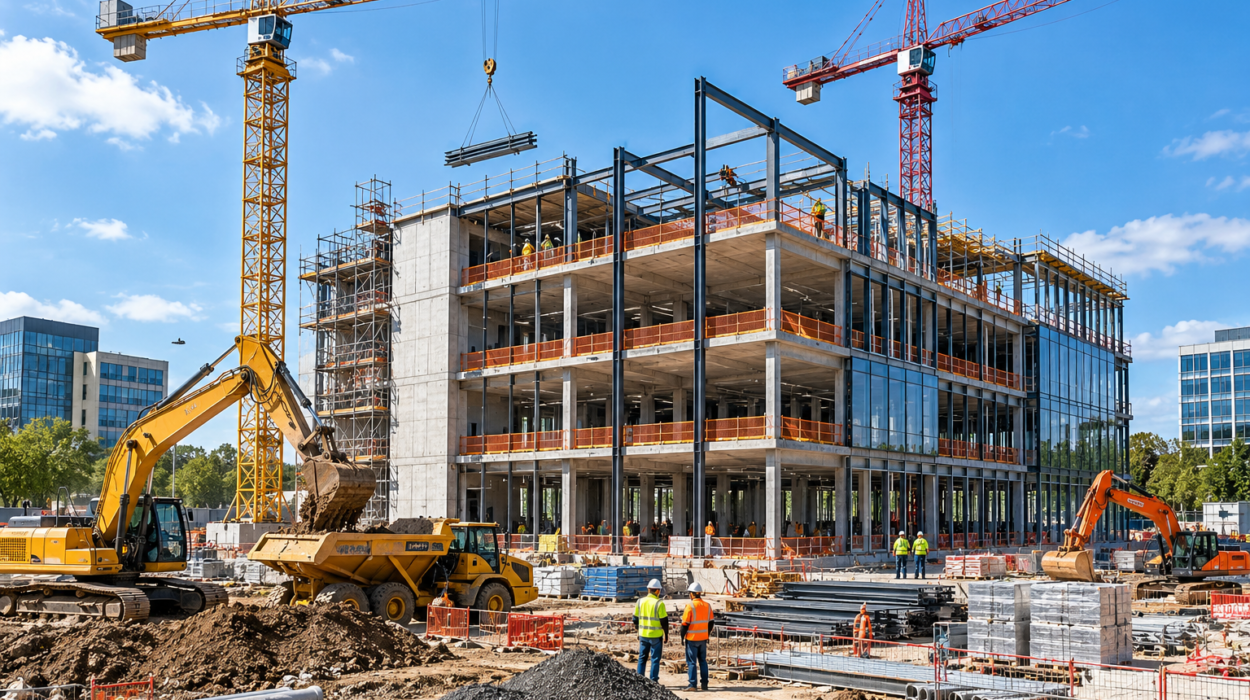
LinkedIn can be a valuable business development platform for office construction companies. Unlike broad social media channels, it provides opportunities to connect with commercial property developers, investors, asset managers, project managers, and other professionals involved in office developments.
These connections can help contractors introduce their services, demonstrate completed project experience, and build relationships with organisations planning future construction work.
However, simply adding hundreds of contacts rarely produces meaningful results.
Commercial office projects often involve substantial budgets, multiple stakeholders, and lengthy decision-making processes. Contractors must understand who influences construction appointments and how professional relationships develop.
A successful LinkedIn strategy focuses on relevant contacts, credible content, and consistent engagement rather than aggressive sales messages.
This guide explains how office construction businesses can use LinkedIn to reach suitable property professionals and support long-term business growth.
Why LinkedIn Matters for Office Construction Companies
Office construction is primarily a business-to-business market.
Potential clients are often organisations rather than individual consumers.
LinkedIn provides a platform where construction companies can identify professionals working in commercial property and development.
It also allows contractors to share project updates and demonstrate technical knowledge.
However, LinkedIn doesn’t replace formal procurement procedures.
Its main value lies in professional visibility and relationship development.
Understand Your Target Audience
Several types of professionals may be relevant to office construction businesses.
These include commercial property developers, real estate investors, asset managers, architects, and project managers.
Their responsibilities differ.
A developer may oversee a new office scheme.
An investor may provide funding.
A property manager may coordinate improvements to an existing building.
Research these distinctions before contacting anyone.
Relevant targeting improves the quality of your networking.
Identify Commercial Property Developers
Developers are an important audience for office construction contractors.
They may commission new buildings, major redevelopments, or commercial extensions.
Research suitable development companies.
Review completed projects.
Identify geographical interests.
Understand typical development values.
Find relevant professional contacts.
Avoid approaching every property developer indiscriminately.
Focus on organisations whose projects match your capabilities.
Understand the Role of Property Investors
Property investors may own or finance office developments.
Some are directly involved in development decisions.
Others appoint specialist development managers or external consultants.
Research investment portfolios.
Identify relevant office assets.
Review publicly announced development plans.
Understand organisational responsibilities.
Avoid assuming that every investor selects construction contractors.
Knowing the decision-making structure helps you communicate more effectively.
Connect With Commercial Property Managers
Property managers may oversee operational office buildings.
Their responsibilities can include maintenance coordination, tenant requirements, and certain improvement projects.
However, major construction decisions may remain with property owners or asset managers.
Research suitable organisations.
Understand their responsibilities.
Identify relevant refurbishment or redevelopment requirements.
Share appropriate project experience.
Avoid promoting new-build services to contacts responsible only for routine maintenance.
Relevant conversations are more productive.
Optimise Your LinkedIn Company Page
Your company page should clearly communicate your office construction capabilities.
Use accurate company information.
Write a concise business description.
Identify relevant services.
Include suitable project photographs.
Maintain current contact details.
Link to your website.
Avoid generic promotional claims.
A professional profile helps potential contacts understand your business.
Improve Your Personal LinkedIn Profile
Personal profiles can be particularly useful for business development.
Your profile should explain your role and relevant construction experience.
Use a professional photograph.
Describe your company’s services.
Highlight genuine project achievements.
Include appropriate contact information.
Share relevant industry insights.
Avoid unsupported claims.
People often prefer engaging with identifiable professionals rather than anonymous company accounts.
Build a Clear Professional Positioning Statement
Potential contacts should understand your expertise quickly.
Explain what your company constructs.
Identify relevant office development types.
Describe geographical coverage.
Highlight suitable experience.
Avoid vague statements about delivering excellence.
Specific positioning helps attract relevant professional attention.
Create a Targeted Connection Strategy
A structured approach is more effective than sending random connection requests.
Identify suitable organisations.
Research relevant professionals.
Review their responsibilities.
Send appropriate invitations.
Maintain accurate contact records.
Avoid automated mass outreach.
Quality connections can support meaningful business discussions.
Personalise Connection Requests
Generic messages often provide little reason for someone to engage.
A personalised invitation can explain why the connection is relevant.
Mention a shared professional interest.
Reference appropriate public information.
Keep the message concise.
Avoid immediate sales pressure.
Respect the recipient’s time.
Professional introductions should feel relevant rather than intrusive.
Avoid Selling Immediately After Connecting
Sending a sales pitch immediately after someone accepts a connection can damage credibility.
Instead, establish a professional relationship.
Review their work.
Engage with relevant posts.
Share useful information.
Respond to genuine discussions.
Introduce services when appropriate.
Avoid repeated unsolicited messages.
Relationship development usually requires patience.
Share Completed Office Construction Projects
Project updates provide valuable evidence of your capabilities.
Publish suitable photographs.
Explain project scope.
Highlight relevant construction activities.
Discuss technical challenges.
Mention verified outcomes.
Obtain necessary permissions.
Avoid exaggerating your involvement.
Authentic project information helps demonstrate experience.
Use Construction Progress Updates
Ongoing developments can provide opportunities for professional content.
Share appropriate project milestones.
Explain construction activities.
Highlight relevant coordination work.
Discuss suitable technical considerations.
Respect client confidentiality.
Avoid publishing sensitive site information.
Progress updates can demonstrate active project experience.
Publish Educational Office Construction Content
Technical insights can help establish credibility with property professionals.
Consider topics involving office construction planning, programme management, building services coordination, and commercial redevelopment.
Explain practical considerations.
Use accurate information.
Reference genuine experience.
Avoid unnecessary technical jargon.
Useful content encourages professional engagement.
Connect LinkedIn With Your Website
LinkedIn and your website should support each other.
Your website can provide detailed information about services and completed projects.
LinkedIn can introduce that information to relevant professionals.
Share links to useful case studies.
Reference appropriate service pages.
Maintain consistent company information.
Avoid excessive promotional linking.
A connected approach helps potential clients research your business.
Strengthen Your Website’s Search Visibility
Property professionals may search for your company after encountering it on LinkedIn.
A specialist office construction SEO company can help improve your website’s structure, relevant content, and organic search visibility.
Optimise important service pages.
Publish detailed project case studies.
Improve internal linking.
Maintain technical performance.
Provide accurate company information.
Avoid excessive keyword repetition.
Search visibility can complement professional networking, although rankings aren’t guaranteed.
Engage With Commercial Property Discussions
Relevant discussions can provide opportunities to demonstrate knowledge.
Follow suitable industry professionals.
Read their posts.
Contribute useful observations.
Ask appropriate questions.
Share relevant experience.
Avoid turning every discussion into a sales pitch.
Meaningful engagement can strengthen professional recognition.
Follow Commercial Property Development Companies
Company pages can provide useful information about potential clients.
Follow suitable developers.
Review project announcements.
Monitor public updates.
Identify relevant professionals.
Record suitable opportunities.
Avoid treating every announcement as an available construction contract.
Further research helps determine commercial relevance.
Monitor Upcoming Office Developments
LinkedIn can complement other project research methods.
Developers may announce new schemes.
Consultants may share professional appointments.
Investors may discuss development activity.
Review public information.
Verify important details.
Track relevant project stages.
Avoid relying entirely on social media announcements.
Official planning and procurement information may provide additional context.
Use LinkedIn Groups Selectively
Relevant professional groups may provide networking opportunities.
Research suitable communities.
Review discussion quality.
Participate where appropriate.
Share useful insights.
Respect group rules.
Avoid repetitive promotional posts.
Active professional communities can be more valuable than large inactive groups.
Consider LinkedIn Advertising
Paid LinkedIn campaigns may help reach selected professional audiences.
Potential targeting options can include industries, organisations, and job functions.
Define a clear objective.
Select relevant audiences.
Prepare suitable content.
Create appropriate landing pages.
Monitor expenditure.
Avoid broad campaigns without commercial justification.
Advertising performance should be measured against qualified opportunities.
Promote Project Case Studies Through LinkedIn
Detailed case studies can support both organic and paid LinkedIn activity.
Choose relevant completed projects.
Prepare concise summaries.
Highlight technical challenges.
Include authorised photographs.
Link to the full case study.
Avoid misleading claims.
Project evidence is often more persuasive than generic promotional messages.
Develop a Consistent Posting Schedule
Regular activity can help maintain professional visibility.
However, posting frequency should remain manageable.
Plan suitable project updates.
Prepare educational content.
Share relevant company news.
Highlight genuine achievements.
Review engagement quality.
Avoid publishing irrelevant material simply to remain active.
Consistency matters more than volume.
Build Relationships With Architects and Consultants
Architects, engineers, and project managers may work across multiple office developments.
LinkedIn can help identify relevant professionals.
Research suitable practices.
Connect with appropriate contacts.
Share technical knowledge.
Discuss general construction challenges.
Maintain professional communication.
Avoid requesting confidential project information.
Credible relationships can support long-term business development.
Use LinkedIn to Support Existing Client Relationships
Previous clients may remain valuable professional contacts.
Maintain appropriate connections.
Share relevant company updates.
Congratulate genuine achievements.
Respond to suitable discussions.
Provide requested information.
Avoid excessive promotional contact.
Positive relationships can support future opportunities.
Organise Your LinkedIn Contacts
A growing network becomes difficult to manage without structure.
Record relevant organisations.
Identify contact responsibilities.
Note suitable project interests.
Track meaningful conversations.
Schedule appropriate follow-up.
Respect privacy requirements.
Avoid collecting unnecessary personal information.
Organised networking supports more consistent business development.
Measure LinkedIn Marketing Performance
Follower counts and post impressions don’t necessarily indicate commercial success.
Track relevant professional connections.
Monitor meaningful conversations.
Record website enquiries.
Review suitable project introductions.
Assess tender invitations.
Consider eventual contract opportunities.
Avoid evaluating performance solely through likes.
Relationship quality matters more than vanity metrics.
Common LinkedIn Marketing Mistakes
Several mistakes can reduce effectiveness.
These include:
- Sending generic connection requests.
- Pitching services immediately.
- Targeting irrelevant professionals.
- Publishing only promotional content.
- Exaggerating project achievements.
- Neglecting personal profiles.
- Ignoring existing relationships.
- Using excessive automated outreach.
- Failing to track meaningful conversations.
- Measuring success only through follower numbers.
Avoid treating LinkedIn as a platform for mass sales messages.
Its value comes from professional engagement.
Create a Practical LinkedIn Marketing Plan
Begin by defining your ideal office construction clients.
Identify suitable developers.
Research relevant investors.
Find appropriate property managers.
Optimise your company page.
Improve personal profiles.
Prepare detailed project case studies.
Develop useful technical content.
Connect with relevant professionals.
Engage in suitable discussions.
Track meaningful opportunities.
Review results regularly.
A structured approach helps focus LinkedIn activity on commercially relevant relationships.
Final Thoughts
LinkedIn can help office construction companies build relationships with commercial property developers, investors, property managers, and construction professionals.
However, successful networking requires more than accumulating connections.
Contractors should understand each contact’s responsibilities, demonstrate genuine project experience, and communicate professionally.
A strong company profile, useful technical content, and detailed case studies provide a credible foundation.
Meanwhile, targeted networking and consistent engagement can introduce your business to organisations involved in future office developments.
By prioritising relevant relationships over aggressive sales tactics, office construction contractors can strengthen their professional visibility and improve their chances of attracting valuable project opportunities.
