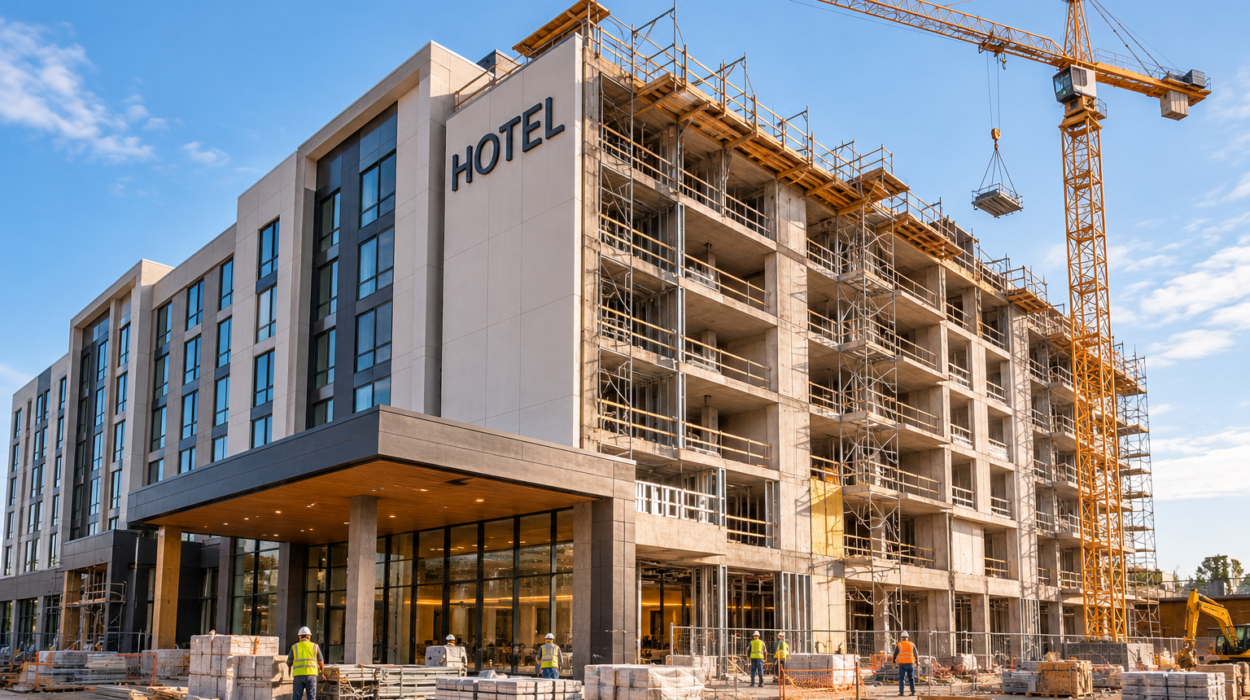
Content marketing can help hotel construction companies attract property developers, demonstrate technical expertise, and build relationships with potential clients. However, promoting specialist construction services requires more than publishing occasional blog posts.
Hotel developers and property investors often conduct extensive research before appointing contractors. They want to understand construction costs, project schedules, technical requirements, and the risks associated with hotel developments.
Useful content can answer these questions while introducing your company’s capabilities.
A well-planned strategy also supports search engine visibility and gives prospective clients reasons to explore your website.
The objective isn’t simply to attract more visitors. Instead, hotel construction contractors should create information that appeals to relevant decision-makers and supports genuine business opportunities.
This guide explains how to develop a content marketing strategy that promotes your hotel construction services, strengthens credibility, and helps generate qualified enquiries.
Understand the Purpose of Content Marketing
Content marketing involves creating and distributing useful information for a defined audience.
For hotel construction companies, this audience may include developers, investors, hotel owners, and construction consultants.
Rather than relying entirely on direct advertising, content marketing demonstrates your knowledge.
It can help potential clients understand complex construction topics.
It also provides opportunities to showcase previous work.
However, publishing content doesn’t guarantee new contracts.
Success depends on relevance, quality, distribution, and the strength of your wider business development activities.
Identify Your Ideal Readers
Before creating content, decide who you want to reach.
A property developer planning a new hotel may have different concerns from an owner considering refurbishment.
Investors may focus on commercial risks.
Project managers may want technical information.
Architects may be interested in construction methods and coordination.
Research your target audience.
Identify common questions.
Understand their project responsibilities.
Consider the information they need before contacting contractors.
Avoid creating content for a broad audience with little connection to hotel development.
Create a Dedicated Hotel Construction Service Page
Your main service page should explain what your company offers.
It provides a destination for visitors who discover your content through search engines or professional networks.
Describe your construction capabilities.
Explain relevant project types.
Highlight suitable experience.
Showcase completed developments.
Provide accurate company information.
Include clear contact details.
Avoid filling the page with generic promotional claims.
Supporting articles should guide interested readers towards relevant service information.
Build Content Around Common Developer Questions
Hotel developers may research numerous issues before beginning construction.
These questions can provide useful article topics.
Consider subjects such as:
- Hotel construction planning.
- Project budgeting considerations.
- Building services coordination.
- Construction programme management.
- Hotel refurbishment challenges.
- Contractor selection.
- Quality management.
- Project handover requirements.
Focus on questions your company can answer accurately.
Avoid publishing articles outside your genuine expertise.
Relevant information helps demonstrate professional knowledge.
Develop a Structured Content Calendar
A content calendar makes publishing more manageable.
Start by identifying your main service areas.
Group related article topics.
Prioritise subjects relevant to potential clients.
Assign suitable publication dates.
Plan project case studies.
Review existing website content.
Avoid creating numerous articles that repeat the same information.
A structured approach helps maintain consistency without sacrificing quality.
Publish Detailed Hotel Construction Guides
Long-form guides can explain complex subjects in greater depth.
For example, a guide to hotel construction planning might discuss project stages, design coordination, procurement considerations, and programme management.
Organise information logically.
Use descriptive headings.
Explain technical terms.
Provide practical examples.
Maintain accurate information.
Avoid unnecessary repetition.
Detailed guides can become useful resources for professionals researching hotel developments.
Use Case Studies to Demonstrate Experience
Project case studies are particularly valuable for construction marketing.
They provide evidence of your company’s capabilities.
Explain the project scope.
Identify your responsibilities.
Describe relevant challenges.
Discuss construction methods.
Highlight verified outcomes.
Include genuine photographs where permitted.
Avoid exaggerating your involvement.
A strong case study connects your marketing claims with actual construction experience.
Create Content About Hotel Construction Costs
Budgeting is an important consideration for hotel developers.
However, construction costs vary according to location, building size, specifications, and project complexity.
Educational content can explain the factors influencing expenditure.
Discuss relevant cost categories.
Explain procurement considerations.
Describe how design decisions may affect budgets.
Highlight potential sources of uncertainty.
Avoid presenting universal prices without appropriate context.
Accurate cost-related content can attract readers researching development feasibility.
Explain Hotel Construction Scheduling
Construction programmes can influence financing arrangements, contractor coordination, and planned hotel opening dates.
Publish content explaining common scheduling considerations.
Discuss project milestones.
Explain sequencing requirements.
Describe subcontractor coordination.
Highlight procurement dependencies.
Address potential delays.
Avoid promising that every hotel can be completed within a fixed timeframe.
Practical scheduling information demonstrates an understanding of development challenges.
Publish Content About Technical Construction Requirements
Hotel buildings may involve complex building services, structural requirements, and detailed interior specifications.
Technical articles can showcase specialist knowledge.
Explain relevant construction methods.
Discuss coordination between trades.
Highlight quality management procedures.
Describe appropriate inspection activities.
Reference applicable requirements accurately.
Avoid providing misleading technical advice.
Content should reflect your company’s genuine experience and the regulations relevant to the project location.
Create Articles About Hotel Refurbishment
Hotel refurbishment can present different challenges from new construction.
Existing buildings may contain hidden defects or outdated systems.
Some projects may also require work around ongoing hotel operations.
Explain refurbishment planning.
Discuss access restrictions.
Describe construction sequencing.
Highlight coordination requirements.
Address relevant safety considerations.
Avoid assuming that every refurbishment project has the same operational constraints.
Useful articles can attract owners and developers considering upgrades to existing properties.
Use Search Engine Optimisation to Increase Visibility
Search optimisation helps search engines understand your website’s content.
Research relevant search topics.
Create descriptive page titles.
Use clear headings.
Improve internal linking.
Maintain technical performance.
Publish original information.
Avoid excessive keyword repetition.
A useful content strategy should prioritise relevant readers rather than search traffic alone.
Organic visibility can support long-term lead generation when content matches genuine user intent.
Strengthen Internal Linking
Internal links help visitors discover related information.
They also help search engines understand relationships between website pages.
Link relevant articles to your hotel construction service page.
Connect related technical guides.
Reference suitable project case studies.
Use descriptive link text.
Avoid inserting unnecessary links into every paragraph.
A logical internal linking structure makes your website easier to navigate.
Build Relevant Industry Backlinks
Links from other websites can introduce new readers to your content and may support search visibility.
A sustainable approach to hotel construction link building should focus on genuine editorial relevance.
Publish useful construction resources.
Share original project insights.
Contribute appropriate expertise to industry publications.
Develop professional relationships.
Provide accurate information worth referencing.
Avoid purchasing manipulative links or participating in artificial link schemes.
Relevant industry coverage is more valuable than collecting unrelated links.
Share Content on LinkedIn
LinkedIn can help distribute content to hotel developers, investors, and construction professionals.
Share useful articles.
Highlight relevant project insights.
Publish concise summaries.
Participate in professional discussions.
Link to appropriate website resources.
Avoid repeatedly posting identical promotional messages.
The objective is to encourage meaningful engagement with relevant professionals.
Repurpose Articles Into Different Formats
One detailed article can support several marketing activities.
For example, a hotel construction planning guide might become a LinkedIn post, a short presentation, or a professional discussion topic.
Identify the most useful information.
Adapt it to the intended platform.
Maintain accuracy.
Link to the original resource where appropriate.
Avoid copying the same content indiscriminately across every channel.
Repurposing can improve efficiency without requiring entirely new research.
Use Construction Photography in Your Content
Photographs can help explain technical subjects.
Show relevant construction stages.
Highlight appropriate building details.
Include completed project images.
Write informative captions.
Obtain necessary permissions.
Avoid using unrelated images that could misrepresent your experience.
Authentic photography strengthens both educational content and professional credibility.
Consider Video Content
Video can provide another way to explain construction processes.
Potential formats include project walkthroughs, technical explanations, and interviews with relevant team members.
Keep videos focused.
Use clear explanations.
Show genuine construction work.
Respect site safety requirements.
Obtain appropriate permissions.
Avoid revealing confidential information.
Video content can complement written articles and project case studies.
Contribute to Industry Publications
Construction and hospitality property publications may welcome relevant expert insights.
Research suitable outlets.
Identify topics aligned with your experience.
Prepare accurate contributions.
Avoid overly promotional writing.
Provide genuine technical value.
Respect editorial requirements.
Industry contributions can introduce your company to professionals outside your existing audience.
Use Content to Support Sales Conversations
Content marketing shouldn’t operate separately from business development.
Relevant articles can support conversations with potential clients.
Share suitable technical guides.
Reference project case studies.
Provide useful planning information.
Answer common questions.
Avoid overwhelming prospects with unrelated material.
The right content can help clients understand your capabilities before detailed discussions begin.
Add Appropriate Calls to Action
Readers interested in your content should have a clear way to explore your services.
Link to relevant service pages.
Provide contact information.
Reference suitable completed projects.
Invite appropriate project enquiries.
Avoid aggressive promotional language.
A professional call to action can encourage interested readers to take the next step.
Measure Content Marketing Performance
Website traffic provides useful information, but it shouldn’t be the only measure of success.
Monitor relevant search visibility.
Review popular articles.
Track service page visits.
Record qualified enquiries.
Identify content that supports client discussions.
Assess commercial outcomes.
Avoid assuming that every visitor represents a potential construction client.
Focus on whether your content reaches suitable audiences.
Update Existing Articles Regularly
Construction information can become outdated.
Regulations, industry practices, and project requirements may change.
Review important articles periodically.
Correct inaccurate information.
Update relevant references.
Replace outdated examples.
Check internal links.
Maintain clear publication information where appropriate.
Avoid changing content simply to create the appearance of freshness.
Accuracy is more important than unnecessary revisions.
Common Content Marketing Mistakes
Several mistakes can reduce effectiveness.
These include:
- Publishing generic articles.
- Targeting irrelevant audiences.
- Repeating similar topics excessively.
- Neglecting project case studies.
- Using inaccurate technical information.
- Ignoring internal linking.
- Publishing without a distribution plan.
- Failing to update important content.
- Using misleading project photographs.
- Measuring success only through traffic.
Avoid prioritising publication volume over genuine usefulness.
Create a Sustainable Content Marketing Strategy
Start by identifying your target clients.
Review common developer questions.
Improve your main service pages.
Plan relevant supporting articles.
Prepare detailed case studies.
Publish useful technical information.
Strengthen internal linking.
Share content through professional networks.
Pursue legitimate industry coverage.
Track qualified enquiries.
Review and improve existing content.
A consistent strategy can support visibility and credibility over time.
Final Thoughts
Content marketing can help hotel construction companies demonstrate expertise, improve online visibility, and attract relevant business enquiries.
Educational guides provide useful information for developers researching construction challenges.
Meanwhile, detailed case studies offer evidence of genuine project experience.
Search optimisation, internal linking, LinkedIn distribution, and relevant industry coverage can help this content reach appropriate audiences.
However, successful content marketing requires more than publishing articles.
Contractors should focus on accuracy, relevance, and the needs of potential clients.
By creating practical resources and connecting them with clear service information, hotel construction companies can build stronger professional credibility and support long-term business development.
