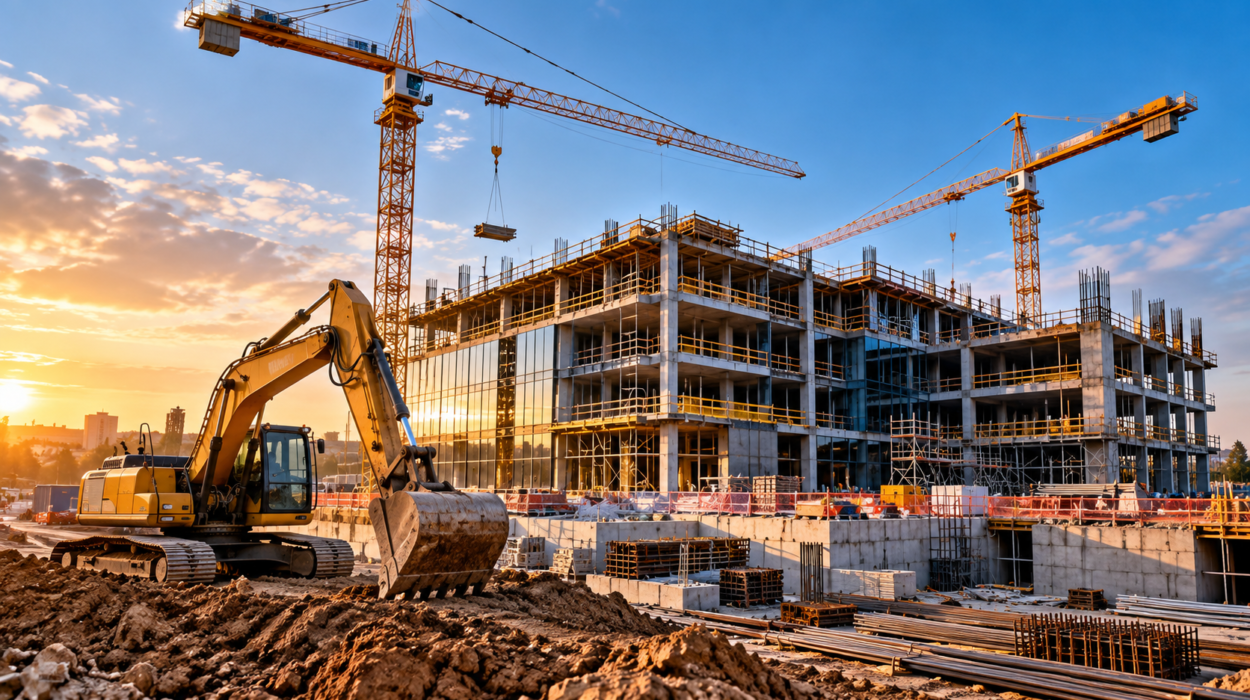
Finding profitable commercial building projects before they reach the tendering stage can give construction contractors a valuable advantage. Instead of waiting for formal invitations, businesses can identify developments early, research the organisations involved, and prepare for potential opportunities.
Commercial construction projects often spend months or even years in planning before building work begins.
During this period, developers may appoint consultants, investigate potential sites, arrange financing, and prepare construction budgets.
Contractors who understand these early stages can identify opportunities before competitors become aware of them.
However, early project discovery doesn’t guarantee a contract.
Developments may be delayed, redesigned, cancelled, or awarded through procurement arrangements that restrict contractor involvement.
The objective is to build a reliable pipeline of suitable opportunities while respecting procurement procedures.
This guide explains where to find upcoming commercial building projects, how to evaluate their potential profitability, and how to approach developers before construction contracts are advertised.
Why Finding Projects Early Matters
Many construction companies begin looking for work when tender invitations become available.
Although this approach can generate opportunities, it also creates intense competition.
Several contractors may submit proposals for the same project.
Meanwhile, businesses that monitor development activity earlier can prepare more effectively.
Early research may help you:
- Identify developers planning future construction.
- Understand proposed project requirements.
- Assess geographical suitability.
- Research potential procurement arrangements.
- Build professional relationships.
- Prepare relevant project references.
- Plan workforce and equipment availability.
However, contractors should avoid assuming that early contact guarantees preferential treatment.
Public procurement and some private procurement processes have specific rules.
Early engagement should remain professional and appropriate.
Understand the Commercial Building Development Process
Commercial developments usually progress through several stages before construction begins.
These stages vary depending on the project.
A typical development may involve site acquisition, feasibility studies, design, planning permission, financing, procurement, and construction.
Contractors can discover opportunities at different points.
For example, a project at the feasibility stage may still have uncertain requirements.
A development with planning approval and secured financing may be closer to construction.
Understanding the project’s current position helps you estimate its potential timeline.
It also prevents wasted effort on opportunities unlikely to proceed soon.
Monitor Local Planning Applications
Planning applications are among the most useful sources of early construction information.
Local planning authorities publish details about proposed developments.
These records may include site locations, project descriptions, submitted drawings, and information about applicants.
Research planning portals covering your operating regions.
Look for commercial developments matching your capabilities.
Review application documents where publicly available.
Identify the developer or applicant.
Record relevant project details.
However, planning applications don’t always identify the eventual construction contractor.
Furthermore, planning permission doesn’t guarantee that construction will proceed.
Treat planning information as an opportunity for further research.
Look Beyond Approved Planning Applications
Some contractors focus entirely on projects that already have planning permission.
However, earlier planning activity may reveal future opportunities.
Consider researching submitted applications awaiting decisions.
Planning consultations and local development proposals can also provide useful information.
Review relevant documents carefully.
Identify projects that may require substantial construction work.
Assess whether they match your preferred contract sizes.
Avoid treating early proposals as confirmed projects.
The further a development is from construction, the greater the uncertainty surrounding its schedule and scope.
Research Commercial Property Developers
Property developers are important sources of future commercial construction opportunities.
Some organisations manage several developments simultaneously.
Others focus on individual projects.
Research developers operating within your target markets.
Examine their previous developments.
Review company websites and public announcements.
Identify appropriate professional contacts.
Where possible, determine which contractors they have previously appointed.
This information can help you understand their procurement preferences.
Develop a focused list of suitable organisations rather than contacting every developer indiscriminately.
Follow Developer Announcements
Developers sometimes announce projects before construction contracts are awarded.
Announcements may discuss land acquisitions, planning applications, financing, or proposed construction schedules.
Monitor relevant company websites.
Follow developers on professional social media platforms.
Review regional business publications.
Subscribe to suitable industry newsletters.
Look for developments that match your company’s experience.
However, announcements may describe preliminary plans rather than confirmed construction activity.
Verify important details before committing significant resources.
Use Construction Project Intelligence Services
Specialist construction intelligence platforms collect information about upcoming developments.
Depending on the provider, these services may track planning activity, project stages, developers, consultants, and procurement opportunities.
Examples in the UK include Glenigan and Barbour ABI.
Research available platforms before subscribing.
Compare geographical coverage.
Consider the types of projects tracked.
Review the depth and freshness of the information.
Assess subscription costs against your expected business development value.
A platform may save research time, but it cannot guarantee contracts.
Your company still needs to qualify opportunities and develop suitable relationships.
Build Relationships With Architects and Consultants
Architects, engineers, quantity surveyors, and project managers may become involved before contractors are appointed.
These professionals can provide useful insight into development activity through appropriate professional channels.
Attend relevant industry events.
Develop relationships with consultants working in your target markets.
Share information about your company’s capabilities.
Provide examples of completed projects.
Avoid requesting confidential information.
Respect existing client relationships and procurement restrictions.
The objective is to become a credible professional contact.
Over time, consultants may become familiar with your company’s experience and suitability for particular projects.
Monitor Commercial Property News
Regional business publications frequently report commercial development activity.
Articles may cover land transactions, investment announcements, planning decisions, and construction milestones.
Research publications covering your operating areas.
Look for information about upcoming developments.
Record the organisations involved.
Check whether a contractor has already been appointed.
Consider the likely project stage.
News coverage can introduce opportunities that haven’t yet appeared on tender platforms.
However, published information may be incomplete or outdated.
Confirm important details before approaching potential clients.
Investigate Land Acquisitions and Development Sites
Land purchases can indicate potential future construction activity.
However, not every acquisition leads to immediate development.
Some organisations hold land for investment or future use.
Research relevant commercial property transactions where information is publicly available.
Identify the purchaser or development organisation.
Review any associated planning activity.
Consider the site’s potential development requirements.
Avoid making unsupported assumptions about project value or timing.
Land acquisition research works best when combined with planning records and developer announcements.
Track Public-Sector Development Plans
Local authorities and other public organisations may publish information about proposed construction investments.
Relevant sources can include capital programmes, development plans, and procurement pipelines.
Review documents covering your target areas.
Identify projects involving commercial building construction.
Research the responsible organisation.
Understand the likely procurement route.
Some projects may require formal competitive procedures.
Early awareness doesn’t remove these requirements.
Use published information to prepare appropriately rather than attempting to bypass procurement rules.
Develop Relationships With Main Contractors
Some commercial developments are delivered by main contractors who appoint specialist construction businesses.
If your company provides subcontracted building services, these relationships can be valuable.
Research main contractors working on relevant developments.
Identify their preferred subcontractor registration processes.
Introduce your business professionally.
Provide suitable project references.
Explain your available capabilities.
Avoid contacting organisations with opportunities outside your expertise.
A reliable subcontractor relationship may create access to future project invitations.
However, inclusion on a supplier list doesn’t guarantee work.
Make Your Company Easy to Discover Online
While researching future projects, remember that developers also research contractors.
Your company should be visible when potential clients search for relevant construction services.
A professional website can support this process.
Explain your capabilities clearly.
Include completed project examples.
Provide accurate geographical information.
Make contact details accessible.
Investing in commercial building contractor SEO can help improve your website’s relevance, technical performance, and organic search visibility.
Create useful service pages and informative project content.
Avoid targeting unrelated construction searches.
The objective is to reach organisations genuinely interested in your capabilities.
Use LinkedIn to Identify Early Project Activity
LinkedIn can provide useful information about commercial development organisations.
Developers, consultants, and project managers sometimes share updates about upcoming projects.
Follow relevant companies.
Connect with appropriate professionals.
Participate in useful industry discussions.
Share examples of your completed work.
Avoid sending unsolicited messages that immediately demand project information.
Build professional relationships gradually.
LinkedIn should complement other research sources rather than replace them.
Evaluate Whether a Project Is Worth Pursuing
Finding a potential development is only the beginning.
Not every opportunity deserves your company’s time.
Create a qualification process.
Consider:
- Project location.
- Estimated contract value.
- Required construction capabilities.
- Likely procurement arrangements.
- Expected construction schedule.
- Available workforce and equipment.
- Commercial risks.
- Potential profitability.
Avoid pursuing projects solely because they appear large.
A smaller, well-matched contract may offer better commercial value than a complicated development outside your experience.
Estimate Project Profitability Carefully
Early project information may be incomplete.
Therefore, initial profitability assessments should remain provisional.
Consider the likely scope of construction work.
Estimate labour requirements.
Review expected material costs.
Assess equipment and subcontractor needs.
Include relevant overheads.
Consider geographical and logistical challenges.
Allow for uncertainty in early estimates.
Don’t assume that a project’s total development value represents the amount available to your company.
Your eventual contract may cover only part of the development.
Detailed pricing should follow when reliable specifications become available.
Assess the Developer’s Commercial Position
A promising construction project still carries financial risks.
Research the organisation responsible for the development.
Consider publicly available company information.
Understand the proposed contractual structure.
Where appropriate, assess payment arrangements and financial requirements.
Avoid relying on rumours or unsupported assumptions.
For significant contracts, professional financial and legal advice may be appropriate.
A large project isn’t necessarily a profitable opportunity if payment risks are excessive.
Understand How the Project Will Be Procured
Commercial building projects can use different procurement arrangements.
Some developers invite selected contractors to tender.
Others use negotiated appointments or design-and-build arrangements.
Publicly funded projects may involve regulated procurement procedures.
Research the likely approach.
Identify whether your company meets relevant eligibility requirements.
Understand when contractor selection may begin.
Avoid assuming that early contact guarantees an invitation.
Your business should prepare for the actual procurement process.
Approach Developers Professionally
Once you identify a suitable project, consider whether an introduction is appropriate.
Research the organisation before contacting it.
Identify the relevant professional contact.
Prepare a concise explanation of your company’s capabilities.
Mention genuinely relevant project experience.
Avoid making unsupported claims.
Don’t overwhelm recipients with lengthy promotional messages.
A professional introduction might offer a company capability statement or suitable project references.
Respect requests not to receive further communication.
The objective is to establish credibility, not pressure developers into immediate decisions.
Prepare a Commercial Construction Capability Statement
A capability statement provides a concise overview of your business.
Developers and consultants may use it to assess potential contractors.
Include:
- Company background.
- Main construction capabilities.
- Relevant project experience.
- Geographical coverage.
- Available resources.
- Appropriate qualifications.
- Contact information.
Keep the document accurate and professional.
Use genuine project photographs where permitted.
Avoid excessive promotional language.
Update the statement when your capabilities change.
A clear presentation makes it easier for potential clients to understand your suitability.
Maintain a Structured Project Pipeline
Early opportunity research becomes difficult to manage without an organised system.
Create a project pipeline.
Record each development’s location, developer, estimated value, and current stage.
Include relevant contacts.
Track your company’s interactions.
Record potential procurement dates.
Useful stages might include:
- Project identified.
- Initial research.
- Suitability assessment.
- Developer contacted.
- Relationship established.
- Procurement anticipated.
- Tender invitation received.
- Proposal submitted.
Review the pipeline regularly.
A spreadsheet or customer relationship management system can help maintain accurate records.
Avoid Spending Too Much Time on Uncertain Projects
Some developments remain in planning for years.
Others never proceed.
Therefore, contractors should balance early research with opportunities closer to construction.
Classify prospects by likely timeframe.
Prioritise projects with clearer evidence of progress.
Maintain lighter contact with longer-term prospects.
Avoid repeatedly chasing developers who have no confirmed plans.
Review project status periodically.
This approach helps protect your business development resources.
Build a Consistent Early-Opportunity Research Routine
Project discovery works best when performed regularly.
Set aside time each week to review relevant information.
Check planning applications.
Monitor developer announcements.
Review construction intelligence platforms.
Follow suitable industry publications.
Update your project pipeline.
Contact appropriate prospects.
Record meaningful changes.
Consistency is more useful than occasional intensive research sessions.
Over time, your company can develop a clearer understanding of local commercial construction activity.
Common Mistakes When Searching for Early Projects
Several mistakes can reduce the value of early project research.
One common problem is assuming that every planning application will become a construction contract.
Another is pursuing developments without assessing profitability.
Other mistakes include:
- Contacting the wrong organisation.
- Ignoring procurement procedures.
- Relying on outdated information.
- Pursuing unsuitable project sizes.
- Failing to research developers.
- Sending generic sales messages.
- Neglecting existing client relationships.
- Failing to track project progress.
Avoid measuring success solely by the number of potential projects identified.
Focus on qualified opportunities that match your company’s capabilities.
Final Thoughts
Finding profitable commercial building projects before they go out to tender requires consistent research and careful opportunity assessment.
Planning applications, developer announcements, construction intelligence platforms, and industry publications can reveal developments at different stages.
Professional relationships with developers, consultants, and main contractors may also help your company become aware of suitable opportunities.
However, discovering a project early doesn’t guarantee a contract.
Construction plans can change, and formal procurement requirements must still be respected.
The most effective approach combines early project identification with realistic financial assessment and professional business development.
By researching suitable developments, preparing relevant project evidence, and maintaining an organised pipeline, your commercial building construction company can improve its readiness for future opportunities and compete for contracts that support sustainable growth.
