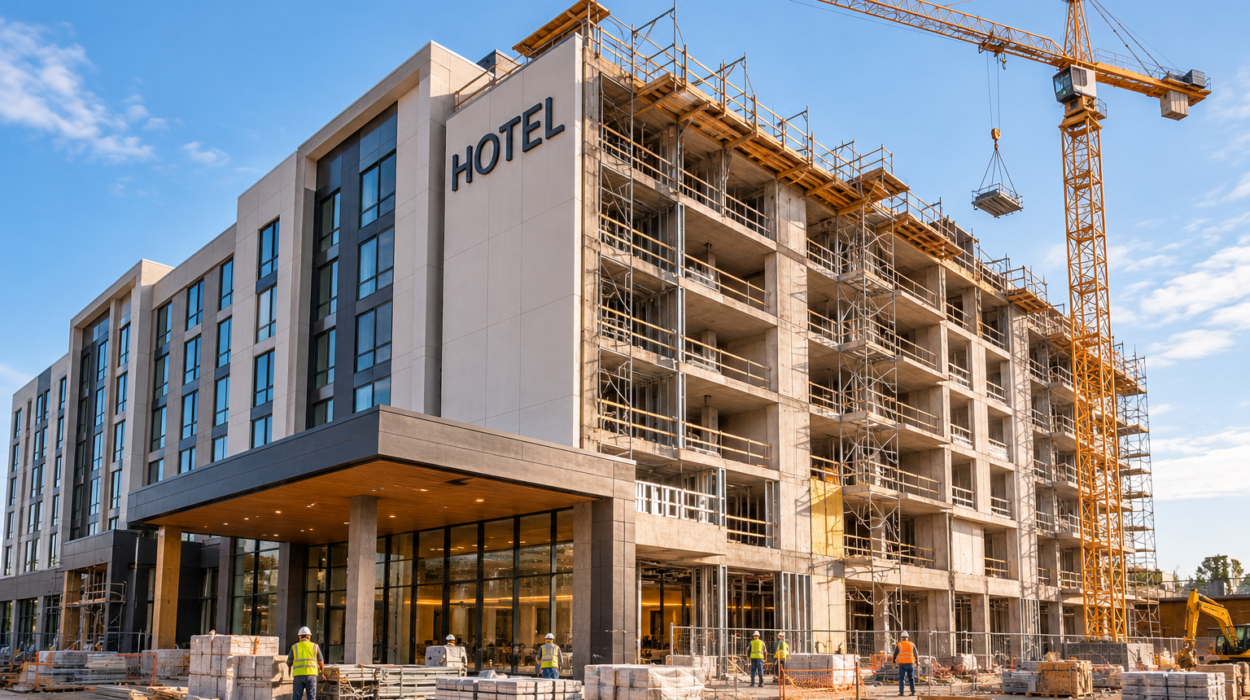
Receiving an enquiry about a hotel construction project is an encouraging first step. However, turning that initial conversation into a signed contract requires considerably more than providing a quotation.
Hotel developments often involve substantial investments, multiple stakeholders, and demanding construction requirements. Developers need confidence that their chosen contractor can manage the project professionally and deliver the agreed scope.
Some enquiries may come from property owners exploring early ideas. Others may involve developers preparing formal tender processes.
Understanding the difference is essential.
Construction companies that qualify opportunities carefully, communicate effectively, and demonstrate relevant experience are better positioned to develop lasting client relationships.
Furthermore, a successful hotel construction contract can create opportunities for future developments, refurbishment work, and repeat business.
This guide explores practical ways to turn hotel construction enquiries into valuable contracts while building relationships that extend beyond individual projects.
Understand the Enquiry Before Responding
Every hotel construction enquiry deserves an appropriate response, but not every prospect requires the same approach.
Some clients may have detailed construction drawings and established budgets.
Others may still be assessing development feasibility.
Before discussing specific solutions, understand the nature of the enquiry.
Identify the proposed project.
Confirm its location.
Ask about the development stage.
Understand the client’s requirements.
Establish the appropriate next steps.
Avoid assuming that every enquiry is ready for a formal quotation.
An informed response creates a stronger foundation for further discussions.
Respond Promptly and Professionally
First impressions matter in construction business development.
A delayed or confusing response may discourage potential clients from continuing the conversation.
Acknowledge relevant enquiries promptly.
Introduce the appropriate contact person.
Confirm your understanding of the request.
Ask necessary questions.
Explain what happens next.
Avoid promising immediate estimates before reviewing sufficient information.
Professional communication demonstrates organisation and respect for the client’s time.
Qualify Hotel Construction Opportunities
Preparing detailed construction proposals can require significant resources.
Consequently, contractors should assess opportunities before committing extensive time.
Consider the proposed contract value.
Review geographical suitability.
Understand the construction scope.
Assess technical complexity.
Identify the procurement stage.
Evaluate available resources.
Consider financial requirements.
Avoid pursuing projects that exceed your company’s operational capabilities.
A qualified opportunity is more valuable than an impressive enquiry that cannot realistically become a suitable contract.
Identify the Real Decision-Makers
Hotel developments may involve several organisations.
The person making an initial enquiry isn’t necessarily responsible for appointing contractors.
Property developers, investors, project managers, and hotel owners may all influence procurement.
Clarify the client’s role.
Understand the development structure.
Identify relevant stakeholders.
Ask about procurement arrangements.
Avoid bypassing established communication procedures.
Knowing who makes decisions helps your company communicate more effectively.
Arrange a Proper Project Discovery Meeting
A structured discovery meeting can help both parties understand whether the project is suitable.
Prepare relevant questions.
Discuss the development objectives.
Review the proposed scope.
Understand important deadlines.
Identify technical considerations.
Clarify available documentation.
Explain your company’s capabilities.
Avoid dominating the conversation with promotional claims.
Listening carefully can reveal the client’s priorities and concerns.
Understand the Developer’s Commercial Objectives
Hotel construction is closely connected to wider property investment decisions.
Developers may have financing arrangements, contractual obligations, or planned opening dates that influence construction requirements.
Ask about important commercial considerations where appropriate.
Understand programme priorities.
Discuss procurement expectations.
Identify relevant project constraints.
Clarify reporting requirements.
Avoid requesting confidential financial information without a legitimate reason.
Demonstrating awareness of commercial objectives can strengthen professional discussions.
Demonstrate Relevant Hotel Construction Experience
Developers want evidence that contractors can deliver similar work.
Prepare suitable project examples.
Explain your responsibilities.
Describe relevant construction challenges.
Highlight verified outcomes.
Discuss management procedures.
Provide genuine photographs where permitted.
Avoid exaggerating previous involvement.
Relevant experience is more persuasive than generic claims about being an industry leader.
Use Case Studies During Client Discussions
A strong case study can help explain how your company approaches construction challenges.
Choose examples that resemble the proposed development.
Highlight relevant technical requirements.
Explain your construction methods.
Discuss project coordination.
Describe verified results.
Avoid presenting unrelated projects simply because they look impressive.
Well-selected case studies help clients assess your suitability.
Build Trust Through Transparent Communication
Trust develops when contractors communicate accurately and consistently.
Explain your capabilities clearly.
Identify relevant limitations.
Discuss realistic project requirements.
Provide accurate information.
Avoid unsupported promises.
Respond to legitimate questions.
Be transparent about uncertainties.
A professional relationship is easier to maintain when expectations are established early.
Prepare a Professional Capability Statement
A capability statement provides a concise overview of your business.
It can support initial discussions and formal procurement processes.
Include your company background.
Explain relevant construction services.
Highlight suitable completed projects.
Introduce key personnel.
Describe geographical coverage.
Provide accurate contact information.
Avoid unnecessary promotional language.
A focused document helps clients understand your organisation without reviewing excessive material.
Develop Clear Construction Proposals
A proposal should address the client’s requirements rather than repeat generic company information.
Review the available project documentation.
Explain your understanding of the scope.
Describe your proposed approach.
Identify relevant assumptions.
Clarify exclusions.
Outline appropriate responsibilities.
Present pricing information according to the procurement requirements.
Avoid vague commitments.
A clear proposal helps reduce misunderstandings during contract negotiations.
Explain Your Project Management Approach
Hotel developments may involve complex construction schedules and numerous specialist trades.
Developers need confidence in your management capabilities.
Explain programme planning procedures.
Discuss subcontractor coordination.
Describe quality management.
Highlight communication arrangements.
Explain progress reporting.
Identify relevant risk management practices.
Avoid suggesting that all projects can be delivered using an identical approach.
Tailor your explanation to the proposed development.
Address Construction Risks Early
Construction projects involve uncertainties.
These may include site conditions, design changes, procurement delays, and specialist installation requirements.
Discuss relevant risks.
Explain how they may be assessed.
Identify suitable mitigation measures.
Clarify responsibilities.
Avoid presenting risk management as a guarantee against problems.
An informed discussion can help developers understand your company’s approach to managing uncertainty.
Present Realistic Construction Schedules
Hotel developers may have target opening dates.
However, construction programmes must reflect actual project requirements.
Review the proposed scope.
Consider design information.
Assess procurement dependencies.
Evaluate subcontractor availability.
Identify relevant milestones.
Explain scheduling assumptions.
Avoid promising unrealistic completion dates to win a contract.
Credible programme planning supports stronger client relationships.
Demonstrate Financial and Operational Readiness
Hotel construction contracts may require substantial financial and operational resources.
Clients may evaluate your company’s capacity before appointment.
Maintain appropriate financial documentation.
Understand insurance requirements.
Assess available personnel.
Review subcontractor arrangements.
Confirm relevant qualifications.
Avoid pursuing contracts beyond your capabilities.
Professional marketing must be supported by genuine operational readiness.
Use Your Website to Reinforce Credibility
Prospective clients may revisit your website during procurement.
Ensure it supports the information provided during discussions.
Maintain accurate service descriptions.
Publish relevant case studies.
Introduce appropriate team members.
Provide clear company information.
Keep contact details current.
Avoid contradictory claims.
A professional website can reinforce confidence throughout the decision-making process.
Maintain Strong Search Visibility
Some developers discover contractors through Google before making contact.
Others search for company information after receiving a proposal.
Relevant organic visibility can support both situations.
Publish useful service pages.
Maintain detailed project content.
Improve internal linking.
Keep technical website performance strong.
Develop genuine industry relationships.
Relevant hotel construction backlinks may help users discover your website and support search visibility when earned through legitimate editorial coverage.
Avoid manipulative link schemes or irrelevant placements.
Search optimisation should complement genuine business credibility.
Follow Up With Prospects Appropriately
Construction procurement can take considerable time.
A lack of immediate response doesn’t necessarily indicate rejection.
Record relevant discussions.
Understand expected decision dates.
Follow up at appropriate intervals.
Provide requested information.
Respect communication preferences.
Avoid repeated messages without a meaningful purpose.
Professional follow-up helps maintain relationships without creating unnecessary pressure.
Handle Contract Negotiations Carefully
Negotiations may involve pricing, responsibilities, programme requirements, and contractual risk.
Review proposed terms thoroughly.
Clarify the construction scope.
Understand payment arrangements.
Identify relevant obligations.
Discuss change management procedures.
Seek appropriate legal or commercial advice when necessary.
Avoid accepting unsuitable contractual conditions simply to secure a project.
A profitable and manageable contract is more valuable than an agreement carrying unreasonable risks.
Establish Clear Expectations Before Work Begins
A successful client relationship depends on shared expectations.
Confirm agreed responsibilities.
Clarify communication procedures.
Understand reporting requirements.
Identify key project contacts.
Document relevant milestones.
Establish appropriate approval processes.
Avoid relying entirely on informal conversations.
Clear expectations can reduce disputes during construction.
Deliver a Professional Client Experience
Winning the contract is only the beginning.
The way your company manages the project can influence future opportunities.
Maintain appropriate communication.
Provide accurate progress updates.
Address issues professionally.
Manage agreed responsibilities.
Document relevant decisions.
Respect contractual procedures.
Avoid making commitments that cannot be delivered.
Consistent professionalism supports stronger relationships throughout construction.
Manage Changes Transparently
Hotel developments may experience design revisions or changes in project requirements.
These can affect costs, schedules, and construction responsibilities.
Use appropriate change management procedures.
Document relevant requests.
Assess potential implications.
Clarify approvals.
Maintain accurate records.
Avoid proceeding with significant changes without suitable authorisation.
Transparent management helps protect both the contractor and the client.
Make Project Handover a Priority
Handover is an important stage in hotel construction.
Developers may require documentation, inspections, commissioning information, and resolution of outstanding matters.
Plan handover activities appropriately.
Coordinate relevant subcontractors.
Prepare required documentation.
Communicate outstanding items.
Follow agreed contractual procedures.
Avoid treating practical completion as the end of every responsibility.
A professional handover can leave a positive final impression.
Maintain Relationships After Completion
Long-term business relationships require attention beyond the initial contract.
Stay in contact with appropriate clients.
Fulfil relevant post-completion obligations.
Respond to legitimate enquiries.
Share suitable company updates.
Discuss future opportunities when appropriate.
Avoid contacting clients excessively.
A positive relationship may lead to repeat work or professional referrals.
Explore Repeat Construction Opportunities
Some developers manage multiple hotel properties.
A successful project may create opportunities for additional developments or refurbishment work.
Understand the client’s wider portfolio.
Identify relevant future requirements.
Maintain professional communication.
Share suitable capabilities.
Respect procurement procedures.
Avoid assuming that successful delivery guarantees another contract.
Repeat business depends on performance, commercial suitability, and future project needs.
Track Your Enquiry-to-Contract Performance
Monitoring business development outcomes can help improve your process.
Record enquiry sources.
Track qualified opportunities.
Monitor tender invitations.
Review submitted proposals.
Measure contract conversion rates.
Assess contract values.
Consider project profitability.
Avoid judging success solely by enquiry volume.
A smaller pipeline of suitable opportunities may produce stronger commercial results.
Common Mistakes That Prevent Enquiries From Becoming Contracts
Several mistakes can reduce conversion rates.
These include:
- Responding slowly to enquiries.
- Failing to qualify opportunities.
- Contacting the wrong decision-makers.
- Submitting generic proposals.
- Exaggerating construction experience.
- Making unrealistic scheduling promises.
- Ignoring contractual risks.
- Neglecting professional follow-up.
- Failing to communicate clearly.
- Treating completed projects as the end of client relationships.
Avoid focusing exclusively on winning contracts.
The objective is to secure suitable work that your company can deliver successfully.
Build a Repeatable Client Conversion Process
Start by establishing an enquiry handling procedure.
Qualify incoming opportunities.
Identify relevant decision-makers.
Arrange suitable discovery meetings.
Prepare appropriate project examples.
Develop clear proposals.
Review contractual requirements.
Maintain professional communication.
Deliver agreed responsibilities.
Manage handover effectively.
Continue appropriate client relationships.
Track business development outcomes.
A structured process helps your company manage opportunities consistently.
Final Thoughts
Turning hotel construction enquiries into long-term contracts requires professional communication, careful qualification, and genuine construction expertise.
Developers need confidence that contractors understand their requirements and possess the resources to deliver complex projects.
Detailed case studies, clear proposals, and transparent discussions can help establish that confidence.
However, securing an initial contract is only part of the process.
Reliable project management, effective communication, and professional handover procedures can strengthen relationships and support future opportunities.
By treating every suitable enquiry as the beginning of a potential long-term partnership, hotel construction companies can improve their conversion process and build a stronger foundation for sustainable business growth.
