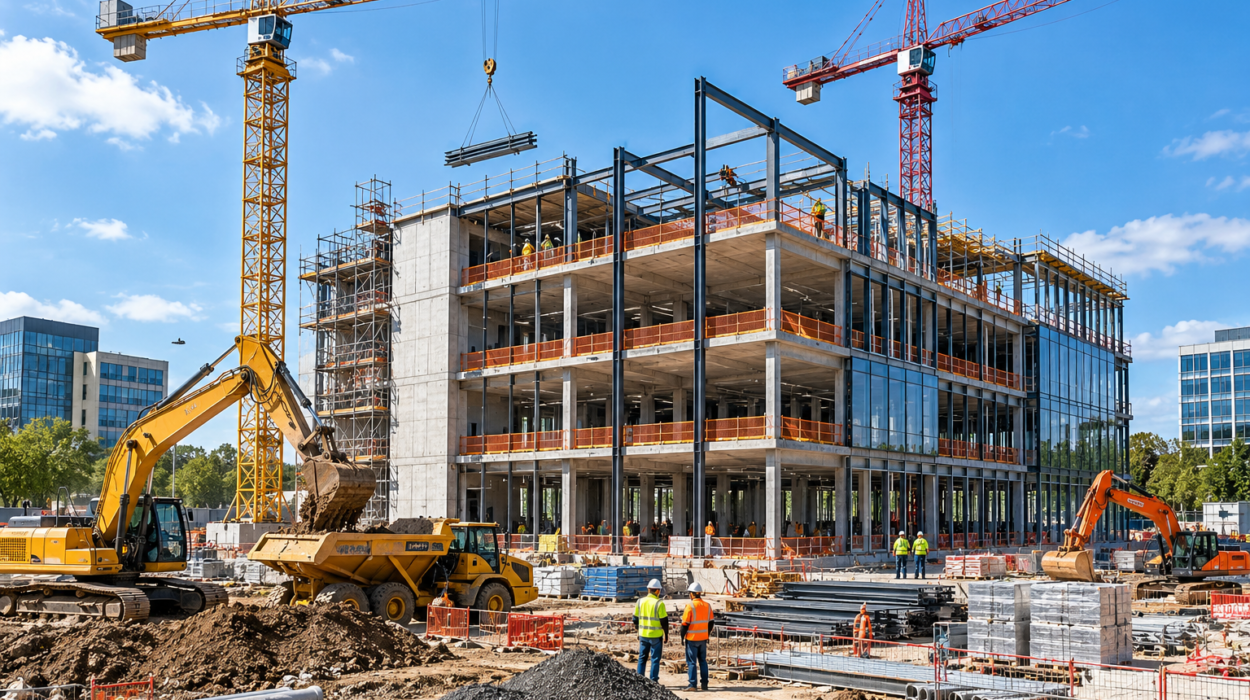
An office construction website should do more than display photographs of completed buildings. It should help commercial property developers, investors, and project managers determine whether your company is suitable for their proposed developments.
A visitor researching office construction contractors may be responsible for a substantial commercial project. However, that visitor is unlikely to make an enquiry if the website provides little information about your experience, services, or technical capabilities.
Poor navigation, vague content, outdated photographs, and complicated contact forms can create unnecessary barriers.
Meanwhile, a professional website can help establish credibility, demonstrate relevant project experience, and encourage suitable visitors to make contact.
The objective isn’t simply to increase website traffic.
Instead, office construction companies should focus on converting relevant visitors into qualified project enquiries.
This guide explains how to build an office construction website that supports professional credibility, search visibility, and commercial lead generation.
Understand Your Website’s Primary Purpose
Before designing your website, define what you want visitors to do.
For most office construction contractors, the main objective is to generate relevant project enquiries.
However, different visitors may have different needs.
A developer might want to review completed office buildings.
A project manager may investigate technical capabilities.
A principal contractor could be searching for a specialist subcontractor.
Your website should help each audience find appropriate information.
Avoid designing pages solely around visual appearance.
Commercial usability should guide important decisions.
Identify Your Ideal Website Visitors
Office construction businesses usually target a specialist audience.
Potential visitors may include commercial property developers, corporate clients, investors, architects, and construction consultants.
Research their requirements.
Understand typical project values.
Identify relevant development types.
Consider geographical coverage.
Review procurement expectations.
Avoid assuming that every visitor is ready to request a quotation.
A clear understanding of your audience supports more effective website content.
Create a Clear Homepage
Your homepage should immediately explain what your company does.
Visitors shouldn’t need to search through several pages to understand your services.
Introduce your office construction capabilities.
Identify relevant project types.
Explain geographical coverage.
Highlight suitable experience.
Provide clear navigation.
Include an appropriate enquiry option.
Avoid vague statements that could describe any construction company.
Specific information helps visitors assess relevance.
Use a Professional Website Design
Commercial construction clients expect a credible presentation.
Your website should look organised and function reliably.
Use consistent typography.
Maintain readable text.
Choose appropriate photographs.
Provide straightforward navigation.
Avoid unnecessary animations.
Keep important information accessible.
Professional design supports usability and confidence.
However, appearance alone cannot replace genuine construction expertise.
Build Dedicated Office Construction Service Pages
Different services may attract different potential clients.
Consider dedicated pages for genuine specialisms.
These might include new-build office construction, commercial extensions, or major office redevelopment.
Explain each service clearly.
Describe relevant construction requirements.
Highlight suitable project experience.
Provide links to case studies.
Include appropriate enquiry options.
Avoid creating duplicate pages with minimal differences.
Useful service pages help visitors understand your capabilities.
Improve Your Website’s Search Visibility
Search engines can help potential clients discover office construction contractors.
A knowledgeable office construction SEO specialist can help improve website structure, technical performance, and relevant organic visibility.
Optimise important service pages.
Use descriptive page titles.
Publish detailed project case studies.
Improve internal linking.
Maintain accurate company information.
Avoid excessive keyword repetition.
Organic rankings aren’t guaranteed, but relevant visibility can support long-term lead generation.
Create a Strong Project Portfolio
Completed office developments provide valuable evidence of your experience.
Your portfolio should be easy to explore.
Organise projects logically.
Include genuine photographs.
Explain relevant project types.
Identify your responsibilities.
Highlight suitable technical capabilities.
Avoid presenting unrelated work as office construction experience.
A clear portfolio helps visitors assess your track record.
Write Detailed Office Construction Case Studies
A photograph alone rarely explains the complexity of a commercial construction project.
Detailed case studies provide additional context.
Describe the project scope.
Explain your responsibilities.
Identify technical challenges.
Discuss relevant construction methods.
Highlight verified outcomes.
Include authorised photographs.
Avoid exaggerating achievements.
Specific examples strengthen professional credibility.
Showcase Your Technical Capabilities
Office construction may involve structural engineering, building services coordination, accessibility requirements, and complex construction programmes.
Potential clients need confidence in your capabilities.
Explain relevant experience.
Highlight specialist resources.
Describe appropriate management procedures.
Introduce suitable personnel.
Reference completed projects.
Avoid unsupported technical claims.
Clear information helps visitors understand your expertise.
Introduce Your Team
Commercial clients often want to know who will manage their projects.
A professional team page can support confidence.
Introduce relevant personnel.
Explain responsibilities.
Highlight genuine experience.
Include appropriate qualifications.
Use professional photographs where permitted.
Avoid exaggerated biographies.
Experienced people are an important part of your company’s proposition.
Make Contact Information Easy to Find
Interested visitors shouldn’t struggle to contact your company.
Display accurate contact details.
Provide clear enquiry links.
Identify suitable personnel.
Include relevant business information.
Ensure contact options work properly.
Avoid hiding essential details.
Straightforward communication supports positive first impressions.
Create an Effective Project Enquiry Form
Your enquiry form should collect enough information to begin a useful conversation.
However, excessive questions can discourage visitors.
Consider requesting:
- Contact name.
- Company or organisation.
- Email address.
- Project location.
- Type of office construction work.
- Brief project description.
- Expected timeline, where known.
Avoid requesting unnecessary personal information.
Keep the process straightforward.
Use Clear Calls to Action
Calls to action guide visitors towards appropriate next steps.
For office construction websites, these should reflect professional business development.
Examples include requesting a project discussion, submitting an enquiry, or contacting the construction team.
Place relevant calls to action on important pages.
Use clear wording.
Maintain consistent navigation.
Avoid aggressive promotional language.
The objective is to make contacting your company easy.
Build Trust Through Genuine Evidence
Commercial clients may investigate your company before making contact.
Provide accurate information.
Showcase completed projects.
Highlight relevant qualifications.
Include genuine testimonials where permitted.
Explain suitable management procedures.
Maintain consistent company details.
Avoid unsupported claims about industry leadership.
Credibility should be based on verifiable experience.
Demonstrate Health and Safety Competence
Office construction projects can involve significant operational risks.
Clients may assess safety management arrangements during procurement.
Explain relevant procedures.
Highlight suitable training.
Describe appropriate management responsibilities.
Maintain accurate documentation.
Avoid unsupported safety claims.
Credible information can support preliminary contractor evaluations.
Explain Your Project Management Approach
Developers need confidence that contractors can coordinate complex developments.
Describe relevant planning procedures.
Explain communication arrangements.
Discuss subcontractor coordination.
Highlight quality management.
Address appropriate programme considerations.
Avoid unrealistic delivery promises.
Clear information helps visitors understand how your company operates.
Optimise Your Website for Mobile Devices
Commercial property professionals may research contractors using phones or tablets.
Your website should work reliably across different devices.
Use responsive layouts.
Maintain readable text.
Ensure navigation functions properly.
Optimise photographs.
Test enquiry forms.
Avoid intrusive visual elements.
A reliable mobile experience supports usability.
Improve Website Loading Speed
Office construction websites often contain large project photographs.
Poorly optimised images can reduce loading performance.
Compress images appropriately.
Use suitable file formats.
Review unnecessary scripts.
Maintain reliable hosting.
Test important pages.
Avoid sacrificing usability for decorative features.
Good technical performance supports visitors and search engine accessibility.
Use Genuine Construction Photography
Authentic photographs help communicate your company’s experience.
Show completed office buildings.
Document relevant construction stages.
Highlight structural features.
Include appropriate technical details.
Obtain necessary permissions.
Avoid relying entirely on generic stock imagery.
Genuine visuals support credibility.
Add Relevant Project Videos
Video can help visitors understand completed developments.
Consider short project walkthroughs.
Explain construction activities.
Highlight technical challenges.
Show appropriate project stages.
Introduce suitable personnel.
Respect confidentiality requirements.
Avoid publishing sensitive project information.
Professional videos can complement written case studies.
Develop Useful Educational Content
Some visitors may research office construction before selecting a contractor.
Educational content can support their decision-making.
Consider articles about office development planning, construction scheduling, building services coordination, and redevelopment challenges.
Explain practical considerations.
Use accurate information.
Reference genuine experience.
Link to relevant services.
Avoid publishing generic content solely to increase traffic.
Useful resources can strengthen credibility.
Improve Internal Website Navigation
Visitors should be able to move between related pages easily.
Link service pages to relevant case studies.
Connect educational articles with suitable services.
Use descriptive anchor text.
Maintain clear menus.
Avoid excessive linking.
Review broken links regularly.
Logical navigation helps visitors explore your capabilities.
Include Relevant Geographical Information
Office construction contractors often operate within defined regions.
Your website should communicate genuine service coverage.
Identify relevant areas.
Highlight suitable local projects.
Provide accurate business information.
Explain geographical capabilities.
Avoid claiming offices where your company has no genuine presence.
Clear location information helps qualify enquiries.
Make Your Website Accessible
An accessible website is easier for a wider range of visitors to use.
Maintain readable text.
Use sufficient contrast.
Provide meaningful image descriptions.
Ensure forms have clear labels.
Support keyboard navigation.
Avoid unnecessary visual effects.
Accessibility should be considered throughout website development.
Track Website Enquiries
Understanding visitor behaviour can help identify opportunities for improvement.
Monitor relevant contact form submissions.
Track appropriate phone enquiries.
Review important landing pages.
Identify common enquiry sources.
Assess project suitability.
Avoid collecting unnecessary personal data.
Use appropriate privacy and consent practices.
Measure Conversion Quality
A website can generate many enquiries without producing suitable opportunities.
Track qualified leads.
Record project types.
Review geographical relevance.
Assess tender invitations.
Monitor proposals submitted.
Consider eventual contract awards.
Avoid measuring success solely through form submissions.
Commercial relevance provides a clearer measure of effectiveness.
Test and Improve Important Pages
Website performance should be reviewed regularly.
Examine important service pages.
Test enquiry forms.
Review navigation.
Assess mobile usability.
Update outdated information.
Monitor relevant conversion data.
Avoid making changes based entirely on short-term fluctuations.
Continuous improvement supports long-term usability.
Common Office Construction Website Mistakes
Several mistakes can reduce enquiry quality.
These include:
- Using generic construction messaging.
- Hiding contact information.
- Publishing weak project descriptions.
- Relying entirely on stock photographs.
- Neglecting mobile usability.
- Creating complicated enquiry forms.
- Exaggerating technical capabilities.
- Ignoring website loading performance.
- Publishing outdated company information.
- Measuring success only through traffic.
Avoid treating your website as a static online brochure.
It should support genuine business development.
Create a Practical Website Improvement Plan
Begin by reviewing your existing website.
Identify your ideal clients.
Clarify your main services.
Improve the homepage.
Create relevant service pages.
Develop detailed project case studies.
Strengthen technical performance.
Simplify enquiry forms.
Improve internal linking.
Review mobile usability.
Track qualified enquiries.
Update content regularly.
A structured approach helps focus improvements on commercially relevant outcomes.
Final Thoughts
An effective office construction website should help commercial property developers, corporate clients, and project managers understand your company’s capabilities and make informed enquiries.
Professional design, clear service pages, and detailed project case studies provide a strong foundation.
Meanwhile, relevant search visibility, straightforward navigation, and accessible contact options make your website easier to discover and use.
However, generating more enquiries isn’t the ultimate objective.
The goal is to attract suitable office construction opportunities that match your technical expertise, geographical coverage, and commercial requirements.
By presenting genuine experience, removing unnecessary barriers, and measuring lead quality, office construction companies can turn their websites into more effective business development assets.
