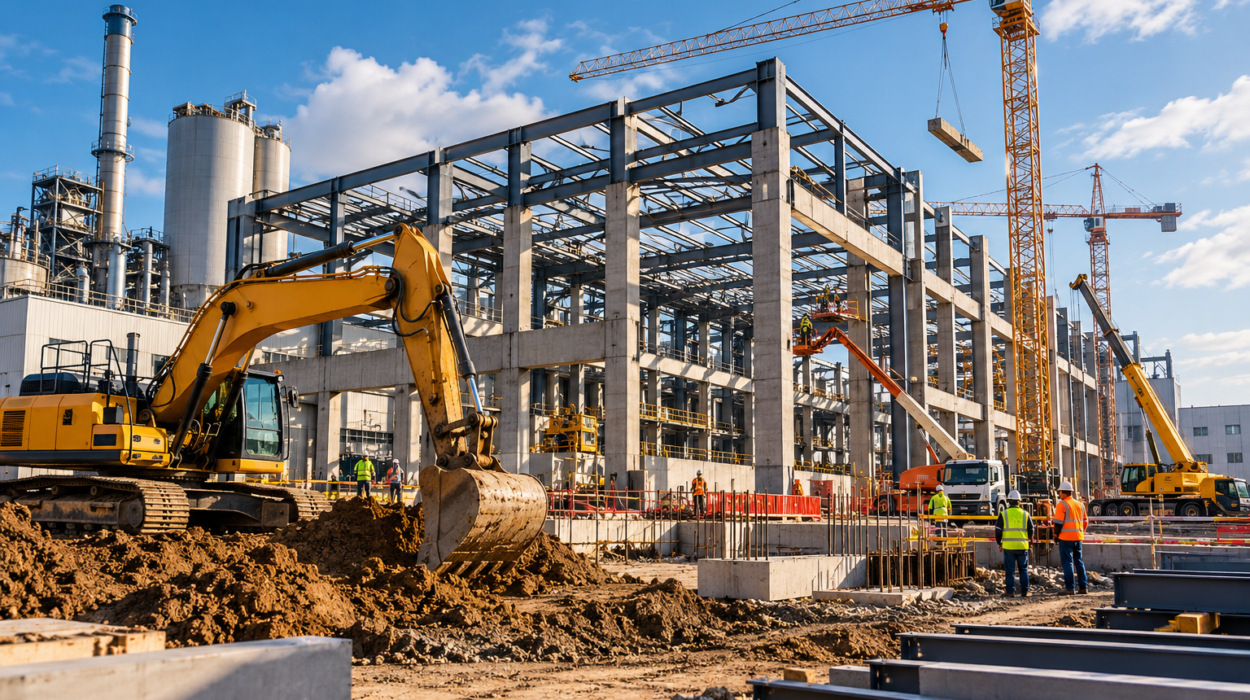
Winning larger industrial construction contracts can transform a contractor’s business. Major factory developments, manufacturing facilities, and industrial expansion projects often involve substantial budgets, complex technical requirements, and long-term relationships with corporate clients.
However, moving from smaller projects to major industrial contracts requires more than increasing your workforce or submitting additional tenders.
Industrial developers and manufacturing companies want contractors who can demonstrate technical expertise, financial stability, reliable project management, and the resources needed to deliver demanding developments.
They also need confidence that your company understands industrial operations and the commercial consequences of construction delays.
Positioning your business effectively can help attract these clients, strengthen your reputation, and improve your chances of competing for higher-value projects.
This guide explores practical strategies for industrial construction companies that want to secure larger contracts and establish stronger relationships with major developers.
Define What Bigger Contracts Mean for Your Business
A larger contract isn’t automatically a better opportunity.
Some projects may generate substantial revenue while exposing contractors to significant financial and operational risks.
Before pursuing bigger developments, define your objectives.
Consider your preferred contract values.
Review geographical coverage.
Assess technical capabilities.
Evaluate available resources.
Identify suitable industrial project types.
Understand your financial capacity.
Focus on contracts that support profitable, sustainable growth rather than pursuing turnover alone.
Identify Your Ideal Industrial Construction Clients
Industrial construction clients operate across different sectors.
Manufacturing companies may require production facilities.
Industrial property developers may commission large buildings for future occupiers.
Logistics operators may need specialist infrastructure.
Corporate property teams may manage expansion programmes across several sites.
Research organisations whose requirements match your capabilities.
Understand their development priorities.
Identify typical project sizes.
Review relevant procurement arrangements.
Avoid targeting every industrial business indiscriminately.
A focused approach helps your company compete for suitable opportunities.
Understand How Industrial Clients Select Contractors
Major industrial projects often involve formal procurement procedures.
Clients may assess contractors through prequalification questionnaires, tender submissions, interviews, and commercial evaluations.
Selection criteria can include relevant experience, financial standing, technical resources, health and safety performance, and proposed construction methods.
Research the expectations of your target clients.
Prepare accurate company information.
Maintain suitable documentation.
Demonstrate relevant project experience.
Avoid relying entirely on competitive pricing.
A strong contractor proposition should address the client’s wider project requirements.
Develop a Clear Market Position
Industrial construction is a broad industry.
Companies that attempt to promote every possible construction service may struggle to communicate their strengths.
Identify the work your business performs particularly well.
Perhaps your company specialises in complex manufacturing buildings.
Alternatively, you may have extensive experience delivering industrial extensions or working within operational facilities.
Explain your capabilities clearly.
Highlight relevant experience.
Use specific project examples.
Avoid vague claims about being the best contractor.
A clear market position helps potential clients understand where your company adds value.
Build a Professional Industrial Construction Website
Your website should demonstrate that your company can handle substantial industrial developments.
Create a dedicated industrial construction service page.
Explain your construction capabilities.
Describe relevant project types.
Showcase completed developments.
Introduce key personnel.
Highlight appropriate qualifications.
Provide clear contact information.
Avoid using generic construction photographs without context.
A professional website can support initial enquiries and formal contractor evaluations.
Improve Your Search Engine Visibility
Industrial developers and corporate property professionals may research contractors through Google.
Relevant organic visibility can help introduce your company to potential clients.
A targeted industrial construction SEO strategy should focus on commercial search intent and genuine construction expertise.
Optimise important service pages.
Publish relevant project case studies.
Create descriptive page titles.
Improve internal linking.
Maintain technical website performance.
Develop useful supporting articles.
Avoid excessive keyword repetition.
Search rankings aren’t guaranteed, but a well-structured website can support long-term business development.
Showcase Experience With Complex Industrial Projects
Major clients want evidence that your company understands demanding construction environments.
Prepare detailed case studies.
Explain the project scope.
Identify your responsibilities.
Describe technical challenges.
Discuss relevant construction methods.
Highlight verified outcomes.
Include genuine photographs where permitted.
Avoid exaggerating your company’s involvement.
Relevant case studies help clients assess your ability to deliver similar projects.
Demonstrate Technical Construction Capabilities
Industrial buildings may require specialised structural systems, heavy-duty floors, complex building services, and equipment installation coordination.
The requirements vary considerably between facilities.
Explain your technical experience.
Describe relevant construction methods.
Highlight specialist subcontractor relationships.
Discuss coordination procedures.
Provide suitable project examples.
Avoid claiming expertise in systems your company hasn’t delivered.
Specific technical information can help differentiate your business from general construction contractors.
Strengthen Your Project Management Processes
Larger developments require effective coordination.
Multiple contractors, suppliers, consultants, and client representatives may be involved.
Review your project management procedures.
Establish clear responsibilities.
Maintain suitable reporting systems.
Develop realistic construction programmes.
Implement appropriate quality controls.
Document important decisions.
Avoid relying entirely on informal communication.
Strong management processes support more reliable project delivery.
Demonstrate Health and Safety Competence
Industrial construction projects may involve heavy equipment, complex lifting operations, and demanding site conditions.
Clients need confidence that contractors manage relevant risks appropriately.
Maintain suitable health and safety procedures.
Provide appropriate training.
Review subcontractor arrangements.
Document relevant competencies.
Prepare accurate supporting information.
Avoid unsupported claims about safety performance.
A credible safety record can support contractor prequalification.
Improve Financial Readiness
Larger contracts can place considerable pressure on cash flow.
Contractors may need to fund labour, materials, equipment, and subcontractor activities before receiving payment.
Review working capital requirements.
Assess payment arrangements.
Understand contractual obligations.
Consider appropriate insurance.
Evaluate financial exposure.
Seek suitable professional advice where necessary.
Avoid accepting projects beyond your company’s financial capacity.
Commercial readiness is essential for sustainable growth.
Build Relationships With Industrial Property Developers
Industrial developers may manage several projects over time.
Establishing professional relationships can create future opportunities.
Research active developers.
Review their project portfolios.
Identify appropriate contacts.
Introduce your capabilities.
Share relevant case studies.
Maintain professional communication.
Avoid aggressive sales messages.
Relationships built before procurement begins can improve awareness of your business.
Connect With Manufacturing Decision-Makers
Manufacturing companies may commission new facilities or expand existing operations.
Relevant contacts can include facilities directors, engineering managers, and corporate property professionals.
Research suitable organisations.
Understand their operational requirements.
Identify development activity.
Introduce your company professionally.
Share relevant industrial construction experience.
Avoid contacting unrelated departments.
Targeted outreach is more effective than generic promotion.
Use LinkedIn to Reach Corporate Clients
LinkedIn can help industrial construction contractors connect with developers and corporate decision-makers.
Create a professional company profile.
Share completed project updates.
Publish useful technical insights.
Connect with relevant professionals.
Follow industrial development companies.
Participate in industry discussions.
Avoid repetitive promotional messages.
A consistent presence can strengthen professional visibility.
Monitor Upcoming Industrial Developments
Finding projects early can provide time to prepare for future procurement.
Research planning applications.
Follow industrial property announcements.
Monitor manufacturing investment news.
Review relevant construction tenders.
Track publicly announced facility expansions.
Identify suitable developers.
Avoid treating proposed developments as guaranteed contracts.
Maintain an organised opportunity database and review project progress regularly.
Build Relationships With Architects and Engineers
Industrial projects often involve specialist designers and consultants.
Architects, structural engineers, building services engineers, and project managers may work on multiple developments.
Research relevant practices.
Attend industry events.
Share technical knowledge.
Introduce your capabilities.
Maintain appropriate professional contact.
Avoid requesting confidential project information.
Strong relationships can improve awareness of your company within the industrial development market.
Prepare Strong Prequalification Documentation
Major clients may require detailed information before inviting contractors to tender.
Prepare accurate company records.
Maintain relevant financial information.
Document appropriate qualifications.
Provide suitable project references.
Explain management procedures.
Review insurance requirements.
Keep information current.
Avoid submitting generic responses that fail to address the client’s criteria.
Well-prepared documentation can improve procurement efficiency.
Create More Competitive Tender Proposals
A strong tender should demonstrate an understanding of the proposed industrial development.
Review project documentation carefully.
Explain your construction approach.
Identify relevant technical challenges.
Describe programme management.
Clarify assumptions.
Present accurate commercial information.
Avoid unrealistic promises.
The objective is to demonstrate capability and provide a credible delivery proposal.
Highlight Experience Working Around Live Operations
Some industrial construction projects take place within operational facilities.
These environments may require careful coordination to minimise disruption.
If your company has relevant experience, explain it.
Discuss access planning.
Describe segregation procedures.
Highlight operational coordination.
Explain relevant safety considerations.
Provide genuine project examples.
Avoid assuming that every industrial facility has identical operational requirements.
Experience working within live environments can be a valuable differentiator.
Invest in Workforce Development
Larger contracts may require additional technical and management capabilities.
Assess current workforce skills.
Identify training requirements.
Develop suitable supervision capacity.
Review recruitment needs.
Maintain relevant competencies.
Plan for specialist subcontractor support.
Avoid expanding faster than your management systems can support.
A capable workforce strengthens both project delivery and client confidence.
Develop Reliable Supply Chain Relationships
Industrial developments may involve specialist materials, equipment, and subcontractors.
Reliable supply chains can support programme planning and quality management.
Review supplier capabilities.
Assess subcontractor competence.
Maintain appropriate procurement procedures.
Identify potential capacity constraints.
Monitor relevant delivery risks.
Avoid relying on unverified suppliers for critical project activities.
Strong supply chain management supports more credible project proposals.
Build a Reputation Through Successful Delivery
Marketing can introduce your company to major clients, but performance influences future opportunities.
Deliver agreed responsibilities professionally.
Maintain clear communication.
Manage construction quality.
Address issues appropriately.
Document relevant outcomes.
Complete contractual obligations.
Avoid making commitments your company cannot fulfil.
A credible track record can support repeat business and professional referrals.
Measure Progress Beyond Contract Value
Larger contracts may increase turnover without improving profitability.
Track suitable business indicators.
Monitor qualified opportunities.
Review tender success rates.
Assess contract margins.
Evaluate project cash flow.
Measure delivery performance.
Consider client satisfaction.
Avoid using revenue growth as the only measure of success.
Sustainable expansion requires commercial discipline.
Common Mistakes When Pursuing Bigger Contracts
Several mistakes can limit growth.
These include:
- Targeting projects beyond available resources.
- Competing entirely on price.
- Neglecting technical case studies.
- Overstating construction capabilities.
- Ignoring financial risks.
- Submitting generic tender responses.
- Failing to develop management capacity.
- Neglecting professional relationships.
- Making unrealistic scheduling promises.
- Pursuing turnover without considering profitability.
Avoid assuming that larger projects automatically create stronger businesses.
Create a Strategy for Winning Higher-Value Projects
Begin by reviewing your company’s capabilities.
Define suitable contract values.
Identify target industrial sectors.
Improve your website and project portfolio.
Strengthen management procedures.
Prepare prequalification documentation.
Build relationships with developers.
Monitor relevant construction opportunities.
Develop workforce and supply chain capacity.
Submit carefully selected tenders.
Review commercial performance.
A structured approach can help your company compete for larger projects without taking unnecessary risks.
Final Thoughts
Positioning an industrial construction company to win bigger contracts requires more than aggressive marketing or additional tender submissions.
Major industrial clients want contractors who can demonstrate technical expertise, financial stability, effective project management, and reliable construction delivery.
A professional website and detailed case studies help communicate these capabilities.
Meanwhile, targeted networking, relevant search visibility, and early project research can introduce your business to suitable developers and corporate clients.
However, marketing must be supported by genuine operational readiness.
By strengthening your capabilities, selecting appropriate opportunities, and building a credible project record, your industrial construction company can improve its position in the market and compete for higher-value contracts with greater confidence.
